Best AI for Pathology Reports
In oncology, diagnostics, and clinical data operations, pathology reports are some of the hardest documents to process correctly. They often combine dense narrative text, nested tables, biomarker results, longitudinal patient history, and institution-specific formatting. For developers building clinical copilots, coding automation tools, or retrieval-augmented generation pipelines, choosing the best AI for pathology reports is less about generic OCR accuracy and more about whether a platform can preserve structure, medical context, and downstream usability.
Traditional OCR systems often break on multi-column reports, inconsistent layouts, and embedded visual elements. That creates a serious problem for healthcare AI workflows: even if the text is technically extracted, the meaning can still be lost if a biomarker result gets separated from its interpretation or a biopsy site becomes detached from the corresponding findings. Modern AI document processing tools solve this by combining layout awareness, multimodal understanding, and in some cases reasoning-driven extraction.
Below is a practical comparison of the top platforms for pathology report processing. The focus is on what matters most for technical teams: layout fidelity, deployment flexibility, support for medical context, integration into agentic workflows, and the tradeoffs you should expect in production.
| Company | Capabilities | Use Cases | APIs | Recent Updates |
|---|---|---|---|---|
| LlamaParse |
|
|
|
|
1. LlamaParse
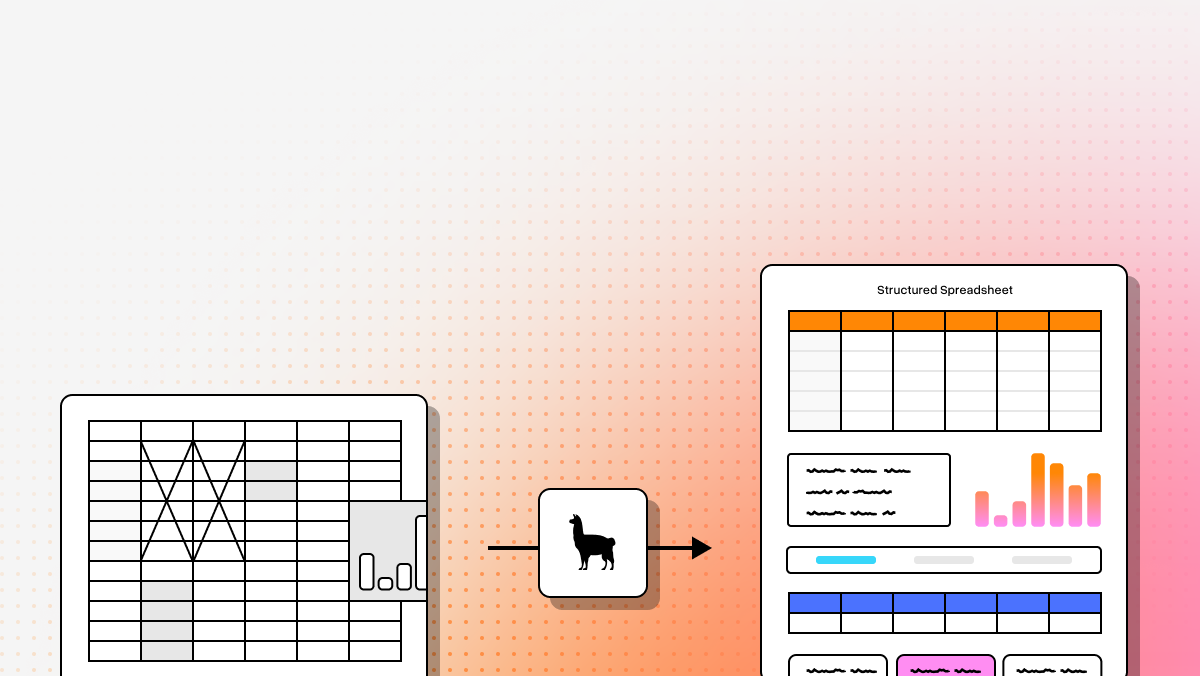
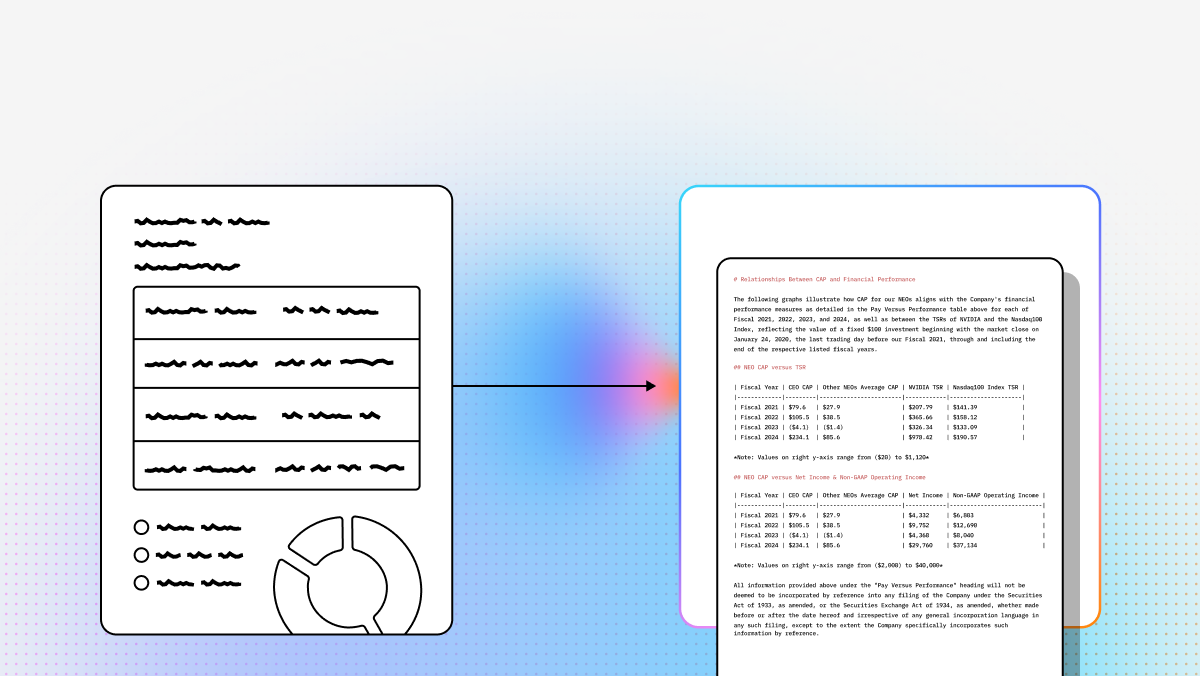
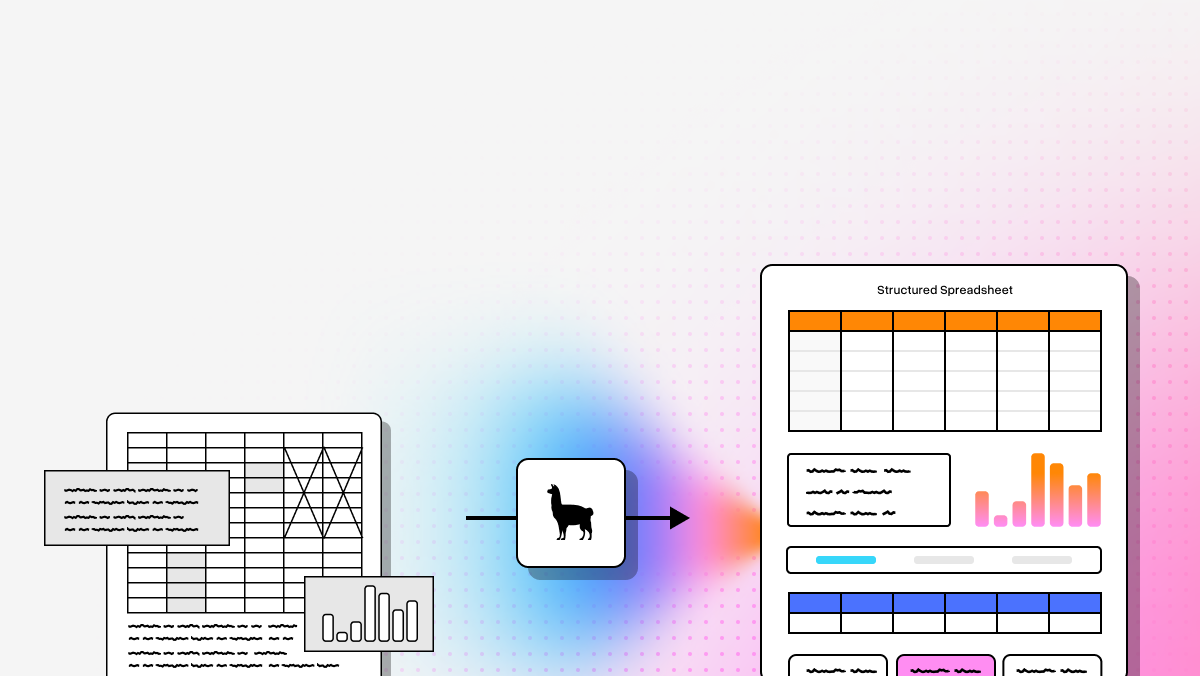
LlamaParse is an enterprise-grade, agentic OCR platform built to handle the kinds of documents that routinely break conventional parsers, including pathology reports with irregular layouts, nested findings tables, biomarker panels, and multi-page clinical context. Rather than relying on rigid rules, it uses Vision-Language Models to interpret document structure more like a human reviewer would, preserving the relationship between sections, tables, and visual elements for downstream AI systems.
For developers and technical teams building healthcare retrieval pipelines, clinical copilots, medical coding tools, or document-centric agents, LlamaParse stands out because it is designed for high-fidelity parsing rather than plain text extraction. As part of the broader LlamaIndex ecosystem, it fits especially well in RAG and agentic workflows where structure preservation directly affects answer quality, traceability, and automation accuracy.
Key benefits
- Preserves complex pathology report structure, including nested tables, multi-column layouts, and section hierarchy.
- Improves downstream LLM performance by keeping diagnostic context intact rather than flattening documents into low-quality text.
- Supports multimodal understanding, which is valuable when reports include charts, diagrams, or other visual diagnostic elements.
- Reduces manual cleanup through self-correcting parsing workflows that improve straight-through processing.
Core features
- Layout-aware structure extraction for complex medical PDFs.
- Multimodal parsing for text, charts, histological diagrams, and other visual content.
- Auto-correction loops that detect and fix parsing mistakes during processing.
- Strong support for agentic document workflows and high-fidelity RAG pipelines.
Primary use cases
- Clinical assistant workflows that summarize patient history and pathology findings from unstructured PDFs.
- Medical coding automation that extracts diagnosis and procedure data from messy clinical documentation.
- Research data synthesis across biomarker reports, clinical trial materials, and medical literature.
Recent updates
- Introduced LlamaExtract for structured data extraction in just a few clicks.
- Rolled out advanced Agentic Document Workflows.
- Improved self-correcting parsing pipelines for irregular medical forms.
Limitations
- Requires basic developer expertise in Python or TypeScript.
- Free-tier API usage includes rate limits that may constrain high-volume production workloads.
- Can be more compute-intensive than simpler OCR approaches when documents are already clean and flat.
2. DeepSeek-OCR
DeepSeek-OCR is best understood as a reasoning-heavy, open-weight approach for teams that prioritize privacy, on-premise control, and semantic comprehension over turnkey SaaS simplicity. Its core value is not just reading text from a page, but connecting information across long, dense medical narratives. That matters in pathology because critical context is often distributed across pages, institutions, and reporting styles.
This makes DeepSeek-OCR especially relevant for hospital engineering teams, privacy-sensitive healthcare environments, and developers who want to customize their own document pipeline. If your priority is data sovereignty and institution-specific tuning, it is a compelling option. If your priority is speed to production and minimal infrastructure burden, it is less convenient.
Core features
- Open-weight reasoning models for local and on-premise deployment.
- Strong comprehension across dense, multi-page pathology and cancer reports.
- Flexible integration for custom OCR and extraction pipelines.
- Fine-tuning potential for institution-specific pathology templates and terminology.
Primary use cases
- Pathology report summarization for oncologists and clinical review workflows.
- Secure offline processing of PHI and other sensitive medical records.
- Genomic biomarker extraction for therapy matching and trial identification.
Recent updates
- Released advanced reasoning models in early 2025.
- Improved comprehension and summarization of complex medical texts.
- Focused on reducing hallucination rates in technical documents.
- Strengthened multi-step logical extraction from medical narratives.
Limitations
- Requires significant GPU compute and supporting infrastructure.
- Lacks the kind of dedicated enterprise support many healthcare buyers want.
- Needs engineers to assemble the surrounding parsing, orchestration, and deployment stack.
3. Google Cloud OCR
Google Cloud OCR, through Document AI, is a strong fit for healthcare organizations that need scalable document processing across large operational workloads. It works particularly well when the document set is relatively standardized, such as intake forms, insurance records, common lab documents, and digitization projects involving massive page volumes. Its value comes from hyperscale infrastructure, mature cloud APIs, and deep integration with the wider Google Cloud stack.
For developers and technical decision-makers, Google Cloud OCR is often attractive when pathology reports are only one part of a much larger document pipeline. It is less specialized for irregular, reasoning-heavy pathology extraction than layout-first agentic OCR, but it remains a practical choice for enterprise teams already invested in BigQuery, Vertex AI, and broader GCP workflows.
Core features
- Pre-trained healthcare parsers for standard medical forms and records.
- Hyperscaler infrastructure for very high document throughput.
- Tight integration with BigQuery and Vertex AI.
- Enterprise-ready APIs for cloud-based operational workflows.
Primary use cases
- Large-scale digitization of archived patient records and legacy medical files.
- Automated patient onboarding and insurance form extraction.
- EHR population and cross-referencing of standard lab and clinical data.
Recent updates
- Continued updates to pre-trained healthcare parsers.
- Improved accuracy for handwritten medical notes.
- Expanded integration with Vertex AI for OCR plus generative AI workflows.
Limitations
- More brittle on highly irregular pathology layouts and nested report structures.
- Per-page pricing can become expensive at scale.
- Focuses more on extraction than deep medical reasoning or summarization.
If your team is building AI systems that depend on pathology reports as a high-value data source, the right choice usually comes down to one question: do you need raw OCR, or do you need document understanding? For complex oncology and diagnostic workflows, structure preservation and semantic context matter far more than basic text recognition alone. That is why platforms built for layout-aware, agentic parsing tend to be the strongest fit when pathology data needs to power real clinical or operational intelligence.
What is AI for Pathology Reports?
Artificial Intelligence (AI) for pathology reports refers to advanced software solutions that utilize enterprise-grade Optical Character Recognition (OCR), Natural Language Processing (NLP), and machine learning to automatically extract, digitize, and interpret complex medical data from unstructured laboratory documents. Instead of relying on manual data entry, these intelligent systems can instantly read scanned documents, PDFs, and faxed biopsy results, converting dense, unstructured text into structured, actionable data that integrates seamlessly into Electronic Health Record (EHR) systems.
Why is it important?
The implementation of AI in pathology reporting is critical because it drastically reduces human error and accelerates the diagnostic timeline, which is absolutely vital for patient care. By automating the extraction of complex medical terminology, tumor margins, and diagnostic codes, healthcare organizations can eliminate administrative bottlenecks, ensure strict regulatory compliance, and allow medical professionals to focus on treatment plans rather than tedious paperwork. Ultimately, this intelligent automation leads to faster turnaround times, significantly lower operational costs, and improved patient outcomes.
How to choose the best software provider
Selecting the best AI software provider for pathology reports requires a rigorous methodology focused on extraction accuracy, data security, and system interoperability. Healthcare enterprises should evaluate providers based on their OCR precision when handling complex medical jargon and their ability to process highly variable, unstructured document formats. Furthermore, it is essential to verify strict adherence to HIPAA compliance and robust data encryption standards, while ensuring the vendor offers seamless API integration with your existing EHR or Laboratory Information System (LIS) to support scalable, high-volume document processing.
What should technical teams look for when choosing the best AI for pathology reports?
The most important factor is not raw OCR accuracy alone, but whether the system preserves clinical meaning and document structure. Pathology reports often include multi-column layouts, nested specimen sections, addenda, biomarker tables, synoptic summaries, and narrative interpretations that must stay connected to each other.
For developer and enterprise evaluation, the best AI for pathology reports should be judged on:
- Layout fidelity: Can it preserve section hierarchy, table structure, column order, and page-level relationships?
- Context retention: Can it keep a biomarker result tied to the correct specimen, interpretation, and date?
- Extraction quality: Can it reliably pull fields such as diagnosis, specimen site, histology, staging, margin status, and molecular findings?
- RAG readiness: Does the output support chunking, citation, and traceable retrieval without flattening the document into unusable text?
- Integration flexibility: Is there an API or SDK that fits your stack and orchestration workflow?
- Deployment model: Can it support cloud, VPC, or on-prem requirements depending on your compliance posture?
- Error handling: Does it include confidence signals, validation, or self-correction to reduce downstream failures?
For pathology use cases, the best system is usually the one that gives you usable structured output for summarization, coding, search, and automation—not just text scraped from a PDF.
How is pathology report AI different from standard medical OCR?
Standard OCR focuses on converting pixels into text. Pathology report AI needs to perform document understanding, which is a much harder task.
A generic OCR system may successfully read the words on the page but still fail in ways that matter clinically, such as:
- separating a diagnosis from the corresponding specimen description
- merging unrelated columns into a single paragraph
- losing table boundaries in biomarker or immunohistochemistry panels
- dropping addendum context that changes interpretation
- misaligning dates, accession numbers, or physician notes
Pathology-focused AI systems go beyond text recognition by combining:
- layout-aware parsing to understand sections, tables, and reading order
- multimodal interpretation to handle text plus visual elements
- semantic extraction to map findings into usable fields
- reasoning or post-processing to connect details across long or irregular reports
For teams building clinical copilots, coding automation, or retrieval pipelines, this difference is critical. Poor OCR can still produce text, but if the structure is wrong, downstream LLM outputs become less reliable, less traceable, and harder to validate.
Can AI reliably extract biomarkers, diagnoses, and staging data from pathology reports?
AI can be very effective for extracting high-value pathology data, but reliability depends heavily on the quality of parsing, the complexity of the report format, and the validation layer you add afterward.
Common fields AI can help extract include:
- primary diagnosis
- specimen type and anatomic site
- tumor histology
- grade and stage references
- margin status
- lymph node findings
- biomarker and molecular test results
- addenda and amended interpretations
That said, pathology reports are challenging because key findings are often distributed across narrative sections, synoptic templates, tables, and follow-up reports. A robust system should therefore support:
- structure-preserving extraction rather than plain text OCR
- schema-based output for consistent downstream use
- page or section traceability so extracted values can be linked back to source text
- confidence scoring or human review workflows for critical fields
- institution-specific tuning when templates vary widely across sites
For production workflows, it is best to treat pathology extraction as a human-in-the-loop or verification-first process, especially when the output affects coding, treatment matching, or clinical decision support. The strongest implementations combine high-fidelity parsing with validation rules, source citations, and targeted QA.
What is the best way to evaluate AI tools for pathology report processing before deployment?
The most effective evaluation is to test tools on a real, representative pathology corpus rather than relying on vendor benchmarks or generic OCR metrics. Pathology performance often breaks down only when the documents include irregular formatting, scanned pages, mixed narrative-plus-table content, or multi-report patient histories.
A practical evaluation framework should include:
- Document diversity: Include scanned PDFs, native PDFs, synoptic reports, biomarker tables, amended reports, and multi-page cases.
- Field-level accuracy checks: Measure extraction quality for diagnosis, specimen site, biomarkers, staging terms, dates, accession numbers, and other high-value fields.
- Structure preservation tests: Check whether tables, headings, and section relationships remain intact in the parsed output.
- RAG performance: Test whether retrieved chunks preserve enough context for correct summarization and question answering.
- Failure analysis: Review where the system drops content, misreads layout, or disconnects findings from interpretation.
- Operational metrics: Compare latency, throughput, cost per document, and infrastructure burden.
- Compliance and deployment fit: Confirm whether the platform supports your cloud, VPC, or on-prem security requirements.
For many teams, a good pilot includes both gold-labeled extraction tests and workflow-based testing, such as whether the tool improves medical coding accuracy, reduces manual review time, or increases answer quality in a pathology assistant.
How do pathology parsing tools fit into RAG, coding automation, and clinical AI workflows?
Pathology parsing is often the first layer in a larger AI pipeline. If the parser preserves structure well, the output becomes much more useful for downstream systems such as retrieval, summarization, coding, and analytics.
Typical integration patterns include:
- RAG pipelines: Parse the report into structured sections and semantically coherent chunks, then index them for retrieval with citations.
- Clinical copilots: Feed parsed report data into LLM prompts for case summaries, biomarker overviews, or longitudinal patient review.
- Coding automation: Extract diagnosis, procedure, and supporting context to help pre-fill coding workflows.
- Registry or research pipelines: Normalize pathology findings into structured records for analytics, trial matching, or cohort building.
- Agentic workflows: Route reports through parsing, extraction, validation, and enrichment steps before writing results into downstream systems.
For developers, the biggest advantage of a stronger pathology parser is that it reduces time spent compensating for poor upstream OCR. Instead of building brittle cleanup logic after extraction, you start with outputs that are closer to the original medical structure and therefore easier to use in production systems.
In practice, the best AI for pathology reports is usually the one that gives you the most reliable bridge from messy document input to structured, traceable, developer-friendly data.